Amethyst was named by people who believed a stone could keep a man sober. That's the root of amethyst meaning: the Greek amethystos, "not intoxicated." For four thousand years the purple quartz has sat in bishops' rings, royal regalia and Catherine the Great's jewel boxes. It once traded alongside ruby. The price fell. The meaning didn't. At Aequa & Co., it became our signature stone.
WHAT DOES AMETHYST MEAN?
Amethyst means "not intoxicated." The word comes from the ancient Greek amethystos, built from a- (not) and methystos (drunk). Greeks and Romans linked the wine-colored stone to sobriety and believed wearing it kept the mind clear. Over centuries, that literal meaning widened into self-control, sound judgment and composure under pressure.
As a stone, amethyst is the purple variety of quartz, silicon dioxide. It's the same mineral as clear rock crystal, smoky quartz and citrine. Color is the only thing that separates them, and color is where every layer of amethyst's story begins.
We'd put it simply. The amethyst meaning that has lasted isn't about wine at all. It's about a man who stays in command of himself when everyone around him doesn't. Every stone carries a story like this; our look at the meaning and origin of malachite and lapis lazuli traces two more.
THE BACCHUS MYTH EVERYONE REPEATS (AND WHERE IT REALLY CAME FROM)
Almost every article on amethyst tells the same tale. Bacchus, god of wine, pursues a maiden named Amethyste. She prays for rescue, the goddess Diana turns her to pure white stone, and a remorseful Bacchus pours wine over her, staining the crystal purple forever.
It's a good story. It's also not ancient. The tale was written by the French Renaissance poet Rémy Belleau in the 1500s, well over a thousand years after the Greeks named the stone.
The older connection is real, though. Early Greek legends tied the stone to Dionysus because of its wine-like color, and later beliefs held that it kept its wearer clear-headed in battle and in business. Belleau didn't invent the link between amethyst and wine. He just gave it a heroine.
Why does this matter? Because the meaning you wear should be one you can stand behind. Knowing which part is poetry and which part is history is the difference between a nice anecdote and an informed choice.
AMETHYST MEANING THROUGH HISTORY
ANCIENT ORIGINS
Amethyst ranks among the oldest gems in human use. The Gemological Institute of America documents an amethyst necklace dated to roughly 2000 BCE, its center stone later inscribed in a South Arabian script. Egyptians carved it, Greeks and Romans set it in rings and intaglios, and amethyst beads have been recovered from Anglo-Saxon graves in England.
ROYAL PURPLE
Purple was the color of power long before amethyst was a birthstone. In Rome, true purple dye was painfully expensive to produce, so the color became shorthand for rank. A stone that held that color permanently, without fading from a toga, carried obvious weight.
Medieval Europe agreed. Amethyst decorated English royal regalia, and it still appears in British coronation jewels. Catherine the Great of Russia collected it in necklaces, earrings and ornaments. That imperial thread runs straight through the Reign collection, where a ring like the REIGN DOM RING was designed around the idea of global dominion.
FROM CARDINAL GEM TO ACCESSIBLE LUXURY
For centuries amethyst stood among the cardinal gems, the small group considered precious above all others. Then enormous deposits turned up in Brazil and the market changed. Fine amethyst became obtainable.
Here's what we find telling. The price dropped, yet the symbolism survived intact. Few gems can say that, because most of their prestige was only ever scarcity. It's also why we price amethyst on what the material and the work are worth, as our fair pricing philosophy explains, rather than on borrowed prestige.
PURPLE AMETHYST MEANING: WHY THE COLOR CARRIES POWER
Purple amethyst meaning is inseparable from its chemistry. The color comes from trace iron (Fe³⁺) inside the quartz structure, activated by natural irradiation over geological time. No iron, no purple. No radiation, no purple either.
That color sits on a spectrum, and the trade has names for its points:
|
Trade Term
|
Appearance
|
What It Tells You
|
|
Rose de France
|
Pale lilac to lavender
|
Soft and subtle; common in vintage jewelry
|
|
Medium Purple
|
Balanced, even violet
|
The bulk of the commercial market
|
|
Deep Siberian
|
Roughly 75 to 80% purple with blue and red flashes
|
The top grade; the name describes color, not origin
|
Two practical truths follow. First, amethyst often shows color zoning, bands of lighter and darker purple, so a skilled cutter orients the rough to put the richest color face-up. That matters most in a line of matched stones, like the roughly 25 carats of amethyst in the LONDON SUPREME TENNIS BRACELET, where one pale stone breaks the rhythm.
Second, the color responds to heat and light. Heat treatment can lighten an overly dark stone, and enough heat turns amethyst yellow or brown. Much of the citrine on the market started life as amethyst. Some amethyst also fades with prolonged exposure to strong light, so a ring left on a sunny windowsill or a car dashboard for a summer isn't the same ring by autumn. Worn normally, the color is stable for a lifetime.
AMETHYST MEANING SPIRITUAL: FAITH, BELIEF AND WHAT HISTORY SHOWS
The spiritual side of amethyst runs through two very different traditions, and it's worth keeping them apart.
THE BISHOP'S STONE
In Christianity, amethyst has a documented, specific role. Bishops have long worn episcopal rings set with amethyst, an allusion to the apostles being "not drunk" at Pentecost in Acts 2:15. Amethyst is also counted among the emblems of the twelve apostles, and the Book of Revelation names it as the twelfth foundation stone of the New Jerusalem. Here, the old Greek meaning of sobriety became spiritual discipline.
Renaissance Europeans went a step further and believed the stone calmed lovers overrun by passion. Same idea, different battlefield.
MODERN CRYSTAL PRACTICE
In contemporary crystal work, amethyst is associated with the crown chakra, calm, intuition and breaking unhealthy habits. Plenty of people keep a piece nearby for exactly those reasons.
We'll be direct, because trust matters more to us than a tidy story. These are beliefs, not proven effects, and no stone treats anxiety, insomnia or addiction. What we can say from years of watching men choose their pieces: a stone picked with intent becomes a reminder. Touch the ring before a hard conversation and you remember who you decided to be. If that idea interests you, our piece on the difference between a talisman and an amulet explores it further.
CRYSTAL AMETHYST MEANING: RAW CLUSTER VS CUT STONE
Crystal amethyst meaning usually refers to the stone in its natural form: pointed clusters and geodes lined with purple crystals. Amethyst forms in the trigonal crystal system, growing as six-sided points inside gas cavities in volcanic rock. Crack a geode from Rio Grande do Sul in Brazil or Artigas in Uruguay and you're looking at crystals that grew in the dark for millions of years.
Major sources today include Brazil, Uruguay, Bolivia, and Zambia, where the Kariba mine produces richly saturated material. The United States has its own: the Four Peaks mine in Arizona's Mazatzal Mountains, known for deep, red-flashing color.
A raw cluster and a cut gem carry the same meaning. What changes is the intent. A cluster sits on a shelf. A cut stone goes with you.
Cutting is where craft enters. Quartz has no cleavage, but it breaks with a shell-like fracture, and long, slender shapes are easy to lose on the wheel. That constraint is what led to the Aequa Cut.
THE AEQUA CUT: OUR ANSWER TO AMETHYST'S OLDEST MEANING
The Aequa Cut is a proprietary gemstone cut invented by the Aequa & Co. atelier. Each stone is an elongated, ultra-long amethyst machined down from a single block of royal purple rough, finished with dual faceted and step cuts. It was developed after close to 40 years of jewelry craftsmanship, and it exists for one reason: amethyst's meaning is power held in check, and no standard cut said that.
THE SHAPE IS THE SIGNATURE
Look at the outline of an Aequa Cut stone and you're looking at the house mark. One A, point up. A second A, inverted beneath it. The two meet at the waist and form the elongated hexagon you see on the finger.
That mirrored form is the point. Aequa takes its name from the Latin for equal and level, and the cut sets one A against its own reflection: balance carried in the silhouette rather than printed on a tag. It runs through the house in negative space too, in the opposing triangles set into the hardware across the collections.
So the cut does two jobs at once. It gives amethyst a shape long enough to read as presence, and it signs the piece without a logo. Quiet branding, in the same register as the stone itself.
WHY MOST CUTTERS WON'T ATTEMPT IT
Start with a single block and take material away until a long, narrow stone remains. Every pass loads stress into a mineral that fractures rather than cleaves, so one wrong angle chips the block, and a chipped stone of that length is finished.
The optics are just as unforgiving. Pavilion angles have to hold along the entire run, or a long stone windows: light leaks through the back instead of returning to the eye. Holding that alignment across 23mm, in step cuts that hide nothing, is what puts the Aequa Cut beyond the common craftsman.
WHAT IT DOES TO THE STONE
Length changes how amethyst behaves on the body. A round stone throws light in one spot. An Aequa Cut stone runs about 5 carats and roughly 18 to 23.5mm, so it draws a line down the finger or along the chain and catches light as you move. The step cuts hold the deep purple in flat planes; the faceted sections break it into flashes. You read the color first and the craft second, which is the correct order.
WHERE TO SEE IT
The cut anchors the Reign collection. The REIGN ROC RING sets a single 18mm stone in solid 925 sterling silver, the closest thing to the cut in its pure form. The REIGN PHARAOH RING runs the longer 23.5mm stone in a polished bezel, in 18K yellow gold vermeil. On the wrist, the REIGN ARC BRACELET turns the cut into links, and the REIGN MAELSTROM BRACELET carries about 25 carats of amethyst against black enamel. At the neck, the REIGN ARC NECKLACE pairs an Aequa-cut chain with a finer cross chain.
Symmetry, opulence, earned success. That's what the cut was built to carry, and it's the same idea the Greeks were reaching for when they named the stone.
AMETHYST MEANING AS A BIRTHSTONE
Amethyst is the February birthstone and the traditional gem for the sixth wedding anniversary. As a birthstone, its meaning is usually given as clarity, courage and steady judgment, which fits a month that asks for patience while winter wears on.
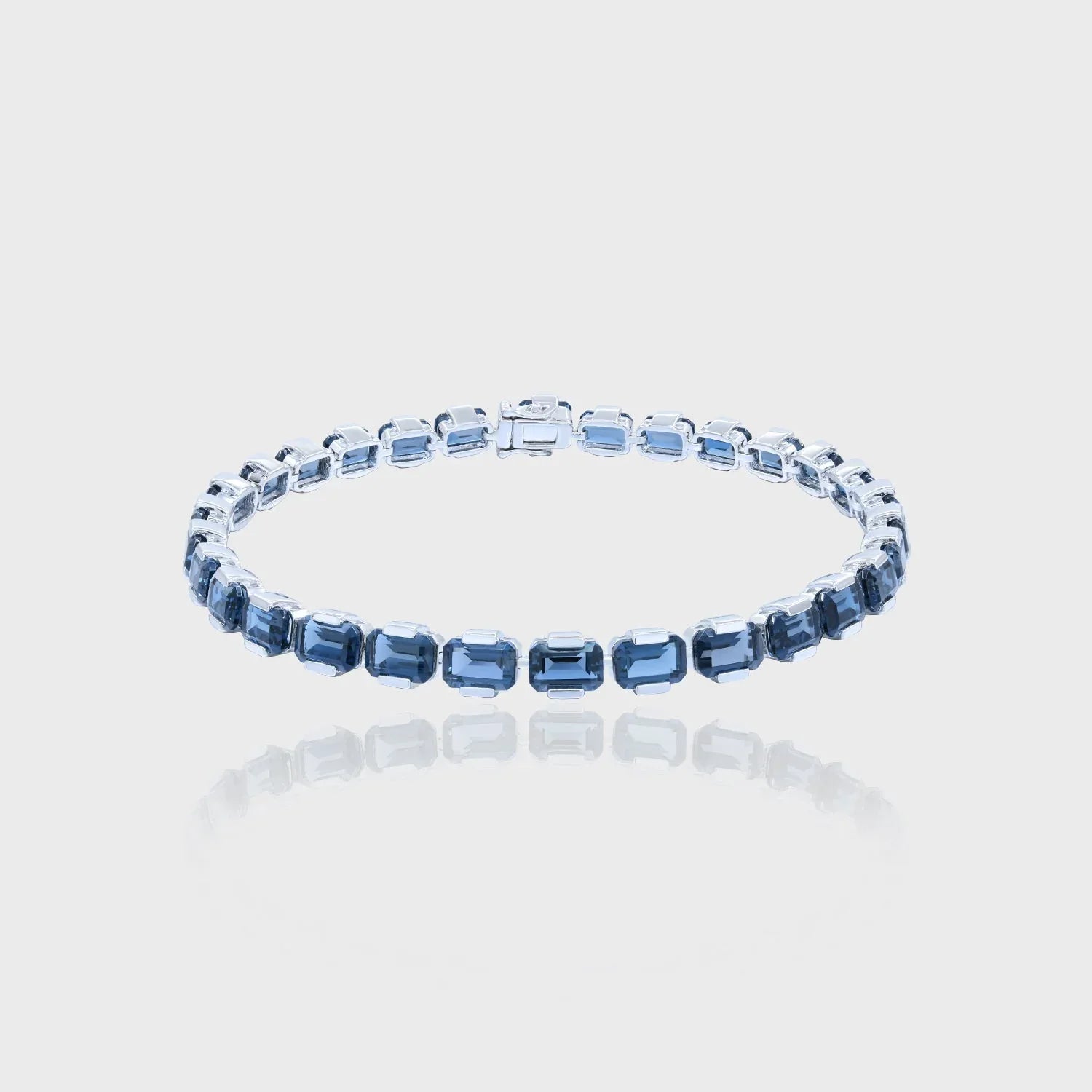
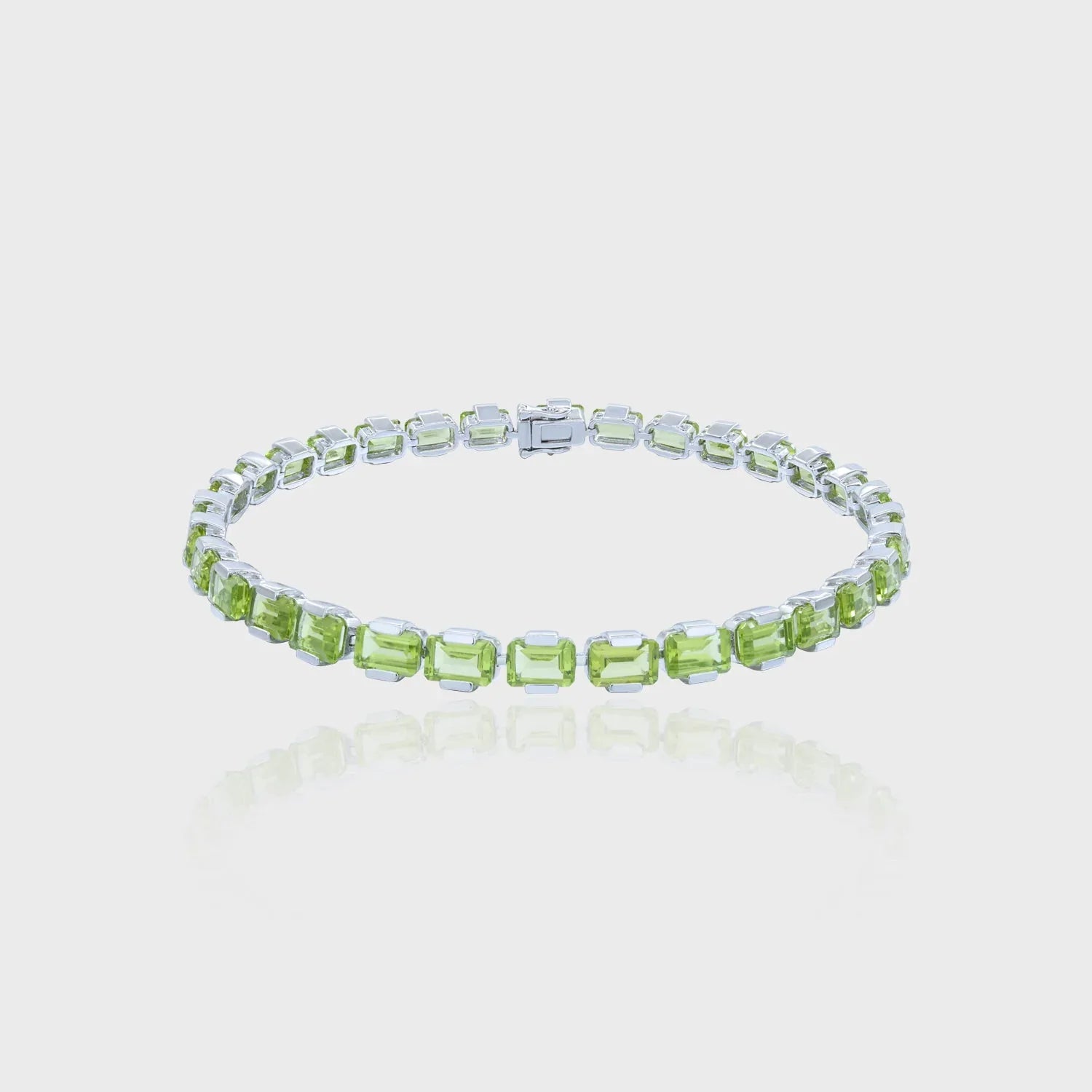
For a man born in February, it's one of the few birthstones that doesn't feel like a compromise. It's durable, it comes in real size, and purple reads as deliberate rather than decorative. You can see how it compares with the rest of the calendar in our guide to birthstones by month, and if your month points elsewhere, the Heir collection carries peridot, London Blue Topaz and moldavite in the same spirit.
AMETHYST MEANING AND BENEFITS FOR THE MAN WHO WEARS IT
Set the symbolism aside for a moment. Amethyst earns its place on a man's hand for practical reasons too.
|
Property
|
Amethyst
|
|
Mineral family
|
Quartz (silicon dioxide)
|
|
Mohs hardness
|
7
|
|
Crystal system
|
Trigonal
|
|
Specific gravity
|
About 2.65
|
|
Cause of color
|
Trace iron plus natural irradiation
|
|
Common treatment
|
Heat (to lighten color)
|
|
Key sources
|
Brazil, Uruguay, Zambia, Bolivia, Arizona (USA)
|
|
Traditions
|
February birthstone; sixth wedding anniversary
|
IT'S HARD ENOUGH FOR DAILY WEAR
At 7 on the Mohs scale, amethyst outlasts pearl and opal by a wide margin (pearls sit around 2.5 to 4.5, which is part of why telling real pearls from fake often comes down to surface wear). It isn't sapphire or diamond, so a knock against granite can still chip an edge, but it handles office life, travel and dinners without fuss. Get the fit right first, too; a loose ring takes more knocks, and our guide to measuring your ring size at home takes five minutes.
IT ALLOWS REAL PRESENCE AT A FAIR PRICE
Because fine amethyst is no longer rare, you can wear a substantial, clean stone without the cost of a comparable ruby. The Madmen collection is built on that idea. The MADMEN BOX RING carries a single stone of about 1.5 carats, while the MADMEN TANG RING lines up slim baguettes for something quieter. At the neck, the MADMEN SIGNUM NECKLACE sets about 1.3 carats between two opposing triangles, and the MADMEN CUE NECKLACE goes further at about 3.7 carats.
IT PAIRS CLEANLY WITH COOL AND WARM METALS
Sterling silver, white gold and platinum let the violet sit forward. Yellow gold warms it into something more old-world, as in the REIGN PHARAOH RING, where a 23.5mm Aequa Cut stone sits in 18K yellow gold vermeil. Both work; they just say different things. If you're weighing metals, start with our breakdown of solid gold vs sterling silver and our explainer on 18K gold vermeil vs gold plating. For a touch of light, the MADMEN SKY CHANNEL RING pairs amethyst with white diamonds.
IT WEARS WITH RESTRAINT
One amethyst piece is usually enough. A single ring, or a slim bracelet worn alongside a watch, says more than three stones competing for attention. Our guides on styling fine jewelry without overdoing it and stacking bracelets cover the balance. When you want to see more options beyond amethyst, browse men's rings.
Care is simple. Warm water, mild soap and a soft brush. Store it apart from diamonds and sapphires, which will scratch it, and take it off for the gym. Our jewelry care tips cover the rest, and if the silver around your stone has dulled, here's how to polish silver and restore tarnished jewelry without harming the amethyst.
FREQUENTLY ASKED QUESTIONS
What does amethyst symbolize?
Amethyst symbolizes clarity, self-control and composure. Its name comes from the Greek amethystos, meaning "not intoxicated." Its purple color later tied it to royalty, and bishops' rings tied it to spiritual discipline.
What is the spiritual meaning of amethyst?
In Christianity, amethyst stands for sobriety and devotion, which is why bishops wear it. In modern crystal practice, it's linked with calm, intuition and the crown chakra. These are beliefs, not proven effects.
Is amethyst good for men to wear?
Yes. Amethyst ranks 7 on the Mohs scale, so it handles daily wear in rings, necklaces and bracelets. Its deep purple reads as confident rather than flashy, especially in sterling silver or white gold.
Does amethyst fade in the sun?
Some amethyst can fade with long exposure to strong sunlight or heat. Everyday wear won't harm it, but don't leave it on a windowsill or car dashboard. High heat can turn it yellow, like citrine.
What is the Aequa Cut?
The Aequa Cut is Aequa & Co.'s proprietary gemstone cut: an elongated, ultra-long amethyst of about 5 carats, machined from a single block with dual faceted and step cuts. It symbolizes power, and it anchors the Reign collection.
Why is the Aequa Cut shaped that way?
The silhouette is the Aequa monogram: one A point-up mirrored by an inverted A beneath it, meeting at the waist to form an elongated hexagon. Aequa means equal in Latin, so the cut carries that balance in its shape.
Is amethyst a precious stone?
Amethyst was once a cardinal gem, ranked with ruby, sapphire, emerald and diamond. Large Brazilian deposits made it more available, so today it's classed as semi-precious, though it remains a fine jewelry stone.