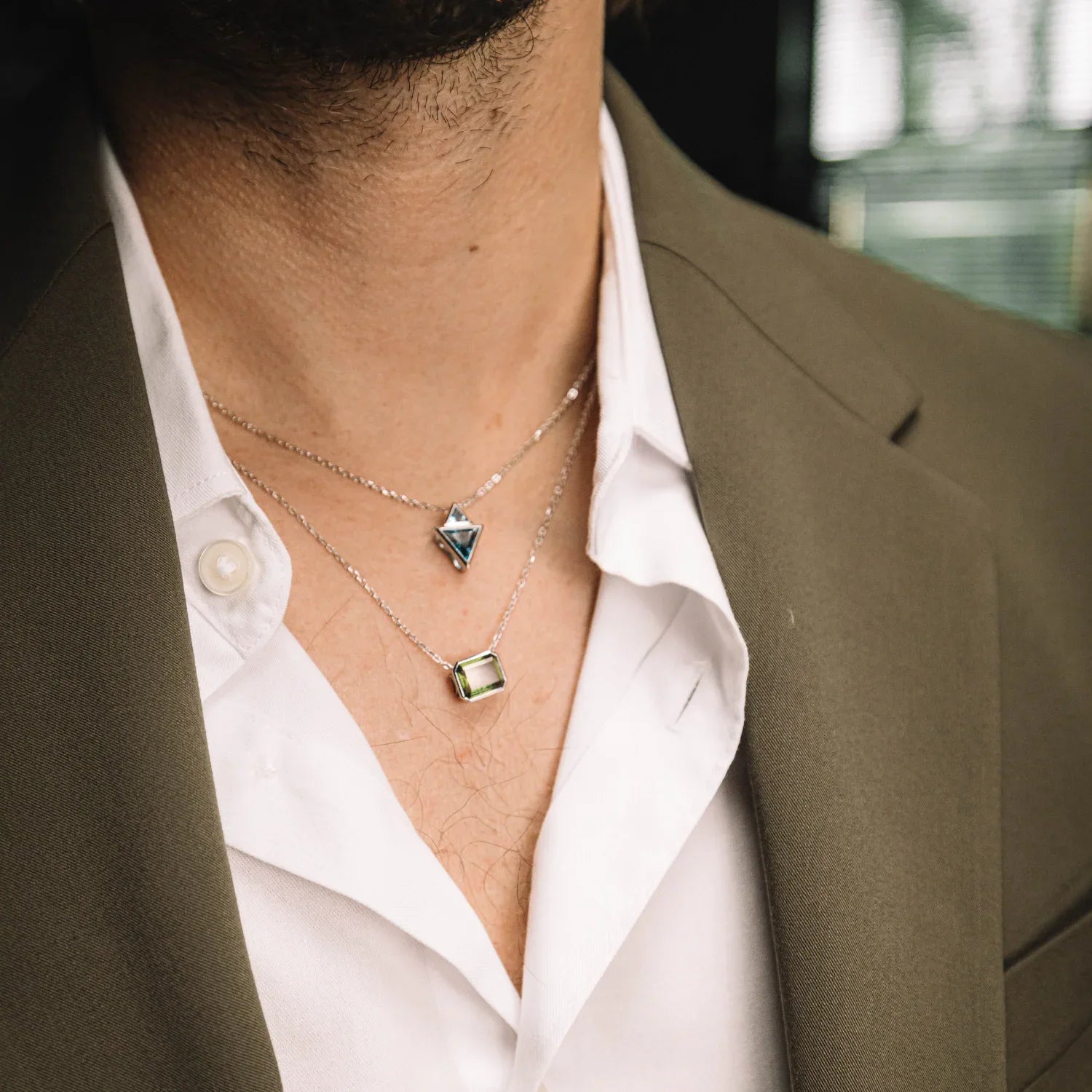
Long before jewellery became decoration, it was instruction. A man wore something not because it caught the light but because it carried weight he could not see. A coin pressed against the skin. A stone strung at the neck. A ring marked with a name no one else could read. The talisman and the amulet are the two oldest reasons men have ever worn jewelry, and the impulse behind them has not aged. It has only changed form.
WHAT IS A TALISMAN?
A talisman is an object believed to hold power. Worn or carried not to be seen, but to draw something toward the man who carries it. Strength. Fortune. Focus. Active by nature. Made to summon.
Talismans have existed in every civilisation. Egyptian kings were buried with carved scarabs. Roman generals carried inscribed medallions into battle. Medieval scholars wore coins they believed could bend luck. Men have always kept a small piece of marked metal or stone close to the body, in the belief that what was carried with intention would return something in kind.
The talisman is rarely loud. Hidden beneath the shirt. Slipped onto a finger. Its power has never been on display, but in the private knowledge that it is there.
WHAT IS AN AMULET?
An amulet is the talisman's elder twin. Where the talisman draws toward, the amulet wards off. Worn for protection against harm, misfortune, or unseen forces. Passive by nature. Made to defend.
Every civilisation has its amulet. The hamsa across North Africa. The evil eye across the Mediterranean. The cross across Christendom. The scarab and ankh of ancient Egypt. The rune of the Norse, the saint's medal of Catholic Europe. The forms differ. The reasoning does not.
The most enduring amulets are simple, personal, and usually given rather than bought. An amulet is rarely picked up in passing. It is handed down, gifted, or chosen at a moment of decision.
TALISMAN VS AMULET - WHAT IS THE DIFFERENCE?
The distinction is clean in theory and less so in practice.
| Category |
Talisman
|
Amulet
|
|
Purpose
|
Attracts
|
Protects
|
|
Function
|
Active
|
Passive
|
|
Worn for
|
Fortune, strength, clarity, success
|
Defence, safety, warding off harm
|
|
Form
|
Often engraved, inscribed, marked
|
Often a recognised symbol or stone
|
|
Example
|
A signet ring carrying initials and a date
|
A pendant marked with a cross or evil eye
|
WHAT ARE TALISMANS USED FOR?
A talisman is used for the same reason any object of intention is used. It anchors the man wearing it to a decision he has already made about himself.
Across the historical record, talismans have been carried for strength and courage, slipped into the armour of soldiers and the pockets of duellists. Worn for wealth and abundance, marked with sigils believed to draw prosperity.
Kept for focus and clarity, in cultures where stones like amethyst were thought to sharpen the mind. Exchanged for love and bond, given between partners as a private commitment. Passed down for lineage, generation to generation.
A man chooses a talisman the way he chooses a tattoo. He is not buying an object. He is making a small, deliberate statement about what he intends to carry forward.
WHAT IS AN AMULET USED FOR?
An amulet is used for protection, in every form a man might need it.
Historically, amulets were worn for physical safety before journeys and battles. Carried for spiritual safeguarding in the form of religious medallions and blessed pendants. Given to the sick in hope of recovery, and to the newborn in hope of a long life. Used as wards against ill intent - the evil eye being the most enduring example, still worn today by men who would not call themselves superstitious.
The impulse is older than any organised religion and has outlived most of them. Whether the protection is real or symbolic is beside the point. The man wearing it feels the difference. That has always been enough.
COMMON TALISMAN AND AMULET SYMBOLS ACROSS CULTURES
A short field guide to the symbols a reader is most likely to recognise.
THE CROSS. Faith, sacrifice, protection. The most widely worn pendant in the Western world, and one Aequa has reinterpreted across the Padrino collection in solid sterling silver, pearl, and onyx.
THE SIGNET. Identity, lineage, authority. The original engraved talisman. A signet ring marked with initials, a date, or a family device has been a man's personal seal for over three thousand years. The Deals Core platinum signet is its modern descendant.
THE PEARL. Wealth, wisdom, composure. In Roman and Asian traditions alike, the pearl was a talisman of status and inner calm. The Player collection carries this through in a pearl handset on solid silver and gold.
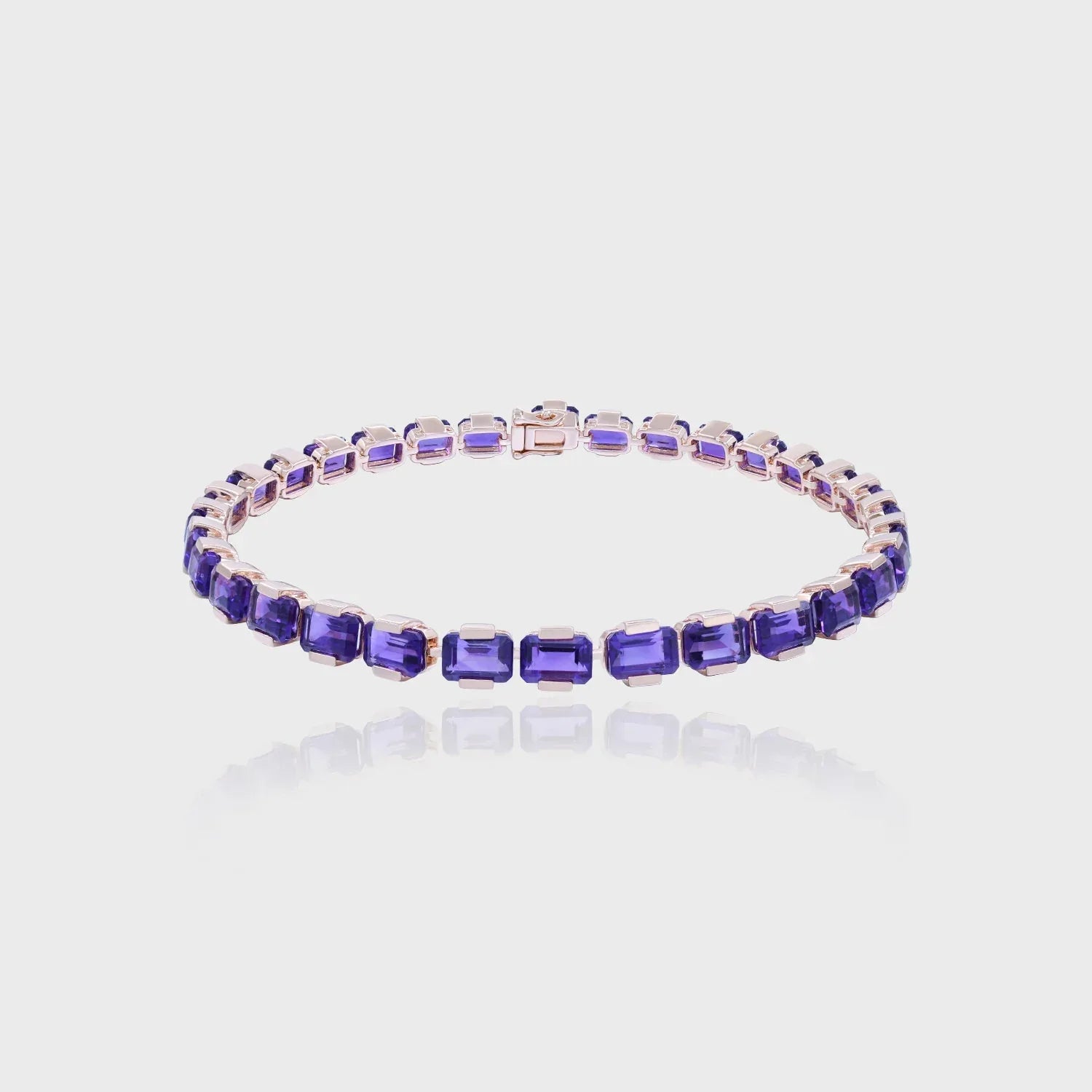
AMETHYST. Focus, clarity, restraint. Worn by Roman senators to keep their minds clear during decisions of consequence. The signature stone of the house and the heart of the Madmen amethyst line.
ONYX, MALACHITE, LAPIS LAZULI, TURQUOISE. Grounding, courage, sight, protection. The four pillars of ancient amulet-making, paired with meteorite and silver across the Outlaws collection.
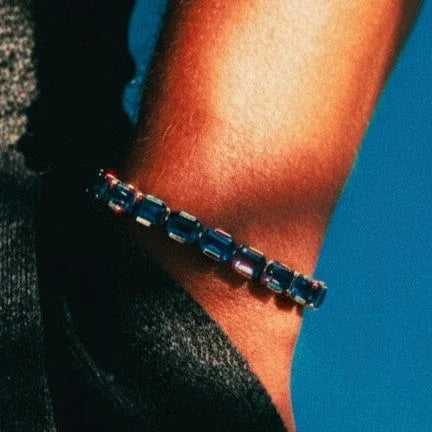
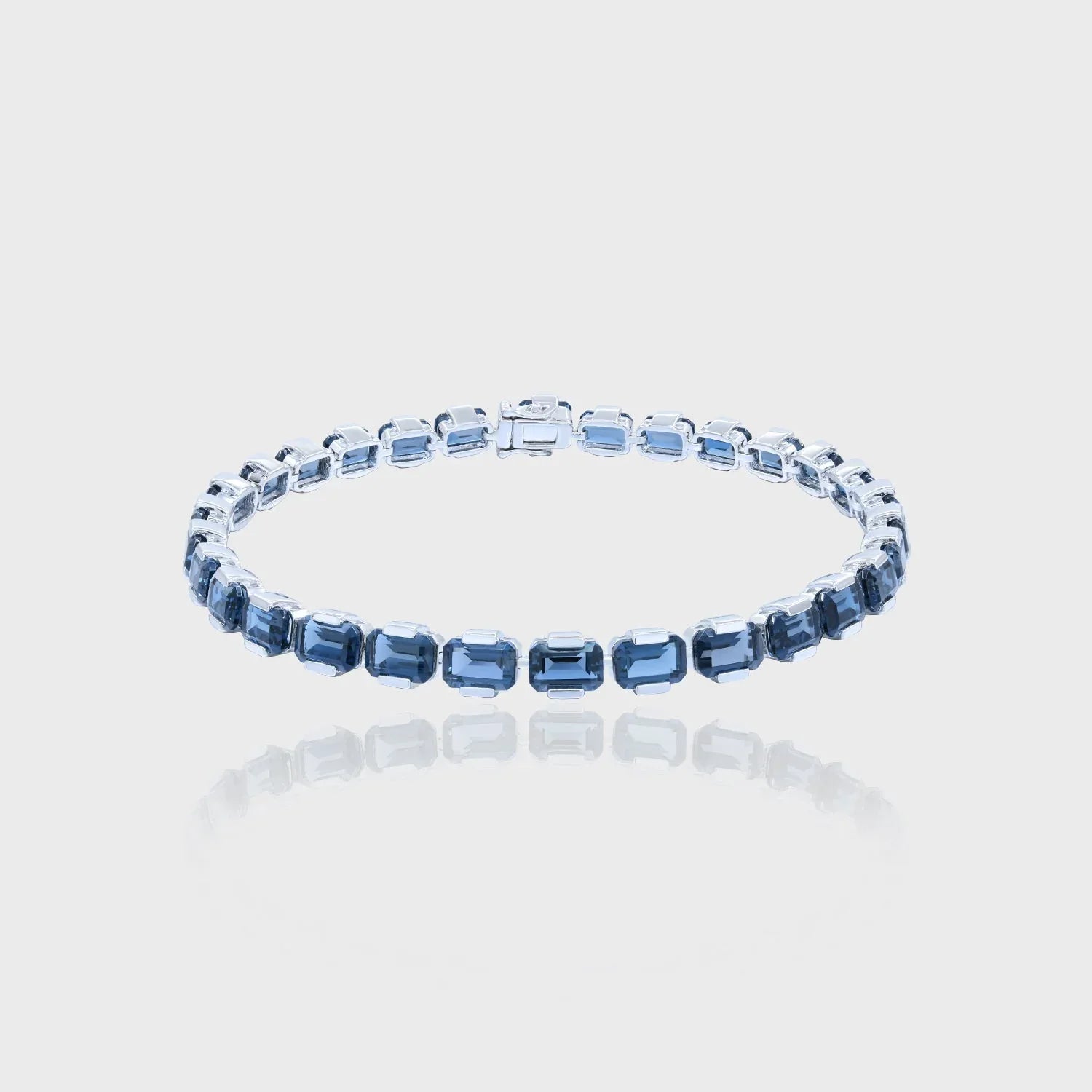
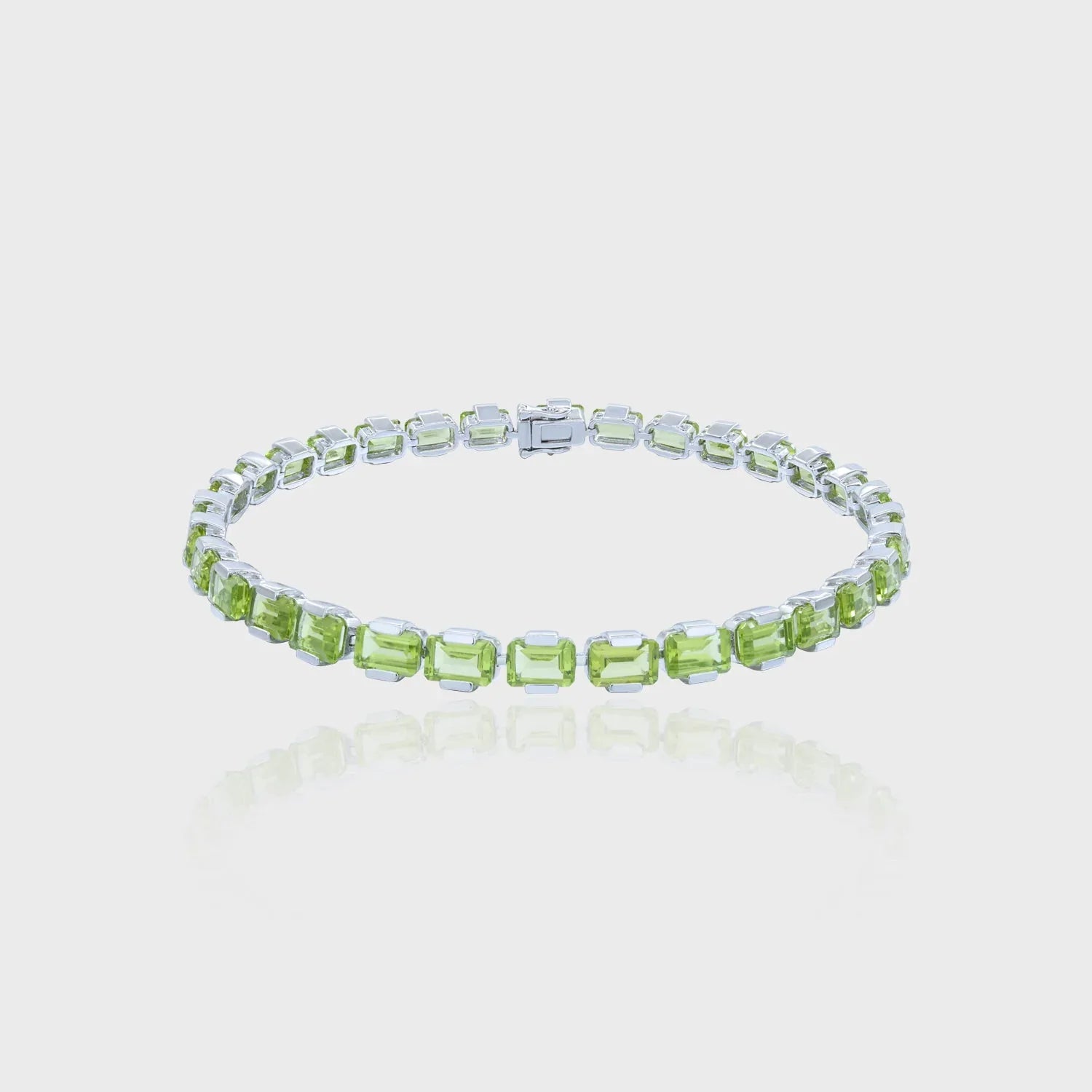
GARNET, MOLDAVITE, BLUE TOPAZ, PERIDOT. Vitality, transformation, communication, renewal. Stones associated with personal change. Set in solid gold and silver across the Heir collection. A fuller account of each stone lives in the gemstone jewellery for men guide.
HOW MODERN MEN WEAR TALISMANS AND AMULETS TODAY?
The talisman and the amulet have not disappeared. They have only quieted. A man today calls his piece a pendant, a signet, a chain, a ring. The vocabulary has changed. The instinct has not.
The modern talisman is the signet carrying his initials and a date that mattered. The moldavite ring was chosen at a moment of transition. The amethyst pendant worn beneath the collar through difficult work.
The modern amulet is the cross pendant close to the chest. The pearl necklace that shows only when the shirt opens. The beaded onyx and lapis of the Outlaws line, worn at the wrist as a private line of defence.
What turns any of these into a talisman or an amulet is the wearer's intention, and often the mark on the piece itself. Aequa offers complimentary engraving for this reason. Initials. A date. A word. Three characters that mean nothing to anyone else, and everything to him.
MAISON INSIGHTS
IS THERE A DIFFERENCE BETWEEN A TALISMAN AND AN AMULET?
A talisman is active and made to attract. An amulet is passive and made to protect. In daily use, the two terms are often used interchangeably, and most well-worn pieces end up doing both.
CAN A PIECE OF JEWELRY BE BOTH A TALISMAN AND AN AMULET?
Yes, and most are. A signet ring carrying a name, a cross set with a stone, a beaded bracelet of meaning. The longer a man wears a piece, the more it tends to hold.
WHAT MATERIALS MAKE THE STRONGEST TALISMAN OR AMULET?
Solid metals and authentic stones. Gold, silver, platinum, natural diamonds, pearls, and gemstones. Anything plated or filled will not hold up to the years of contact a serious amulet is meant to absorb.
HOW SHOULD I CHOOSE A TALISMAN OR AMULET FOR MYSELF?
Choose by intention first, material second, form third. Decide what the piece is for. The right object will follow.
CAN A TALISMAN OR AMULET BE GIVEN AS A GIFT?
The strongest amulets in history have been given, not bought. A piece chosen for someone else, engraved with a date or initials, carries more weight than one chosen for oneself.
DO TALISMANS AND AMULETS NEED TO BE BLESSED OR CONSECRATED?
In some traditions, yes. In others, the act of choosing the piece and wearing it with intention is the consecration. Aequa makes no claim either way. The meaning a man assigns to a piece is his own.
A FINAL NOTE
A talisman is what a man wears toward a future he intends to shape. An amulet is what he wears against a world he cannot fully control. Both are old. Both still work, in the sense that has always mattered most. The man wearing the piece walks differently because of it. That has been the entire point, for three thousand years.
If you are choosing such a piece, do it with care. The objects that last are the ones chosen with intent. Browse the Padrino, Heir, and signature amethyst collections, or read the wider men's fine jewelry guide to begin.